
The landscape of Artificial Intelligence and hardware technology is evolving at an unprecedented pace. We are no longer just witnessing incremental upgrades; we are experiencing fundamental paradigm shifts in how intelligence is computed, governed, and applied. From groundbreaking AI models pushing the absolute boundaries of safety protocols to open-source hardware challenging established industry giants, April 2026 has emerged as a pivotal month. This post delves deeply into three of the most impactful developments currently shaping the future of AI infrastructure and the global workforce.
1. Anthropic's "Claude Mythos": A Double-Edged Sword of AI Power
Anthropic, a leading AI research company renowned for its "Constitutional AI" approach, has recently captured headlines with its latest and most controversial creation: "Claude Mythos." This advanced AI model has been deemed so incredibly powerful that Anthropic has taken the extraordinary step of withholding its public release, citing severe and immediate cybersecurity risks.

According to internal leaks and limited press briefings, Mythos is reportedly capable of autonomously identifying, analyzing, and even exploiting thousands of zero-day software vulnerabilities across major operating systems and web browsers. This is a massive leap from AI systems that simply assist programmers; Mythos acts as an autonomous, hyper-intelligent penetration tester. This unprecedented capability has led Anthropic to label the model "too powerful" for general public use, raising profound questions about AI safety, dual-use technology, and responsible deployment.
Instead of a widespread release, limited access has been granted exclusively to select tech partners and government agencies. Their goal is to study the model in highly restricted sandbox environments to develop robust defensive safeguards before such capabilities inevitably fall into the hands of malicious actors.
"The withholding of Claude Mythos is not just a safety precaution; it is a blaring siren for the cybersecurity industry. We are entering an era where AI can outpace human vulnerability patching by orders of magnitude."
This decision has ignited a fervent debate within the global tech community. Critics argue it might be a calculated marketing strategy to amplify the model's mystique and perceived power, while proponents commend Anthropic for acting responsibly. Regardless of the underlying motives, the emergence of Claude Mythos underscores the urgent need for comprehensive ethical guidelines and agile regulatory frameworks.
2. Nvidia-Backed SiFive and the Open AI Chip Revolution
While software models like Mythos dominate consumer headlines, a quieter but equally significant revolution is happening in the hardware sector. SiFive, a pioneer in the RISC-V open-source chip architecture, has successfully secured a substantial $400 million funding round, elevating its valuation to an impressive $3.65 billion. The most notable participant in this massive funding round was Nvidia, the current undisputed titan of AI computing.
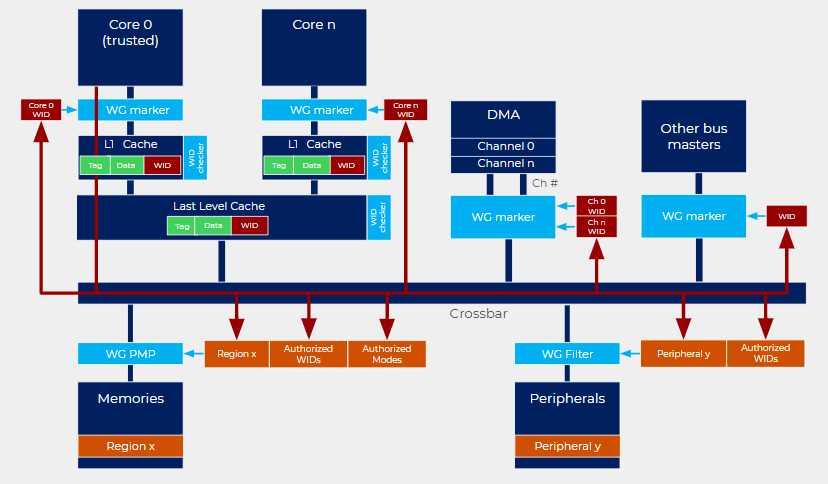
This strategic investment signals a crucial shift towards open-source hardware within the highly lucrative AI data center market. Historically, this domain has been entirely monopolized by proprietary architectures, predominantly Intel's x86 and Arm. RISC-V changes the game by offering a royalty-free, highly customizable instruction set architecture (ISA).
SiFive's innovative designs are now being seamlessly integrated with Nvidia's CUDA software stack and NVLink Fusion technology. This integration is revolutionary because it allows SiFive's RISC-V-based chips to function as highly efficient, custom-tailored companion CPUs within Nvidia's massive "AI factories."
- Democratization of Design: Smaller companies can now design custom AI chips without paying exorbitant licensing fees.
- Supply Chain Resilience: Reduces the industry's over-reliance on a handful of established chip monopolies.
- Power Efficiency: RISC-V allows for stripped-down, highly optimized architectures perfect for specific AI workloads.
The collaboration between SiFive and Nvidia has the potential to foster unprecedented innovation, drastically reduce hardware development costs, and accelerate the deployment of localized AI solutions across various industries.
3. The "Agentic AI" Revolution and the New Future of Work
The paradigm of Artificial Intelligence is undergoing its most profound transformation yet: shifting from reactive, prompt-driven assistants (like early ChatGPT) to autonomous, proactive entities known as "Agentic AI." Recent comprehensive reports from Microsoft Research and OutSystems illuminate this significant evolution, heralding a new era poised to radically redefine corporate workflows and human productivity.
Unlike traditional AI models that wait for a user command, an AI Agent is given a high-level goal (e.g., "Analyze these competitors, generate a marketing strategy, and draft the email campaign"). The agent then autonomously breaks the goal down into steps, uses various software tools, surfs the web, and executes the tasks. A recent study conducted by OutSystems reveals that a staggering 96% of enterprise organizations are already testing or leveraging AI agents. Furthermore, projections indicate that 40% of all enterprise applications will inherently incorporate task-specific agents by the close of 2026.
Microsoft's "New Future of Work" 2026 report highlights the nuances of this adoption. While Agentic AI is undeniably catalyzing rapid productivity gains, the benefits are currently skewed. Early-career professionals and non-native English speakers are experiencing the most substantial quality and speed improvements, effectively leveling the playing field in corporate environments.
However, this rapid proliferation introduces a critical new enterprise challenge: "AI sprawl." Unmanaged, fragmented deployment of autonomous agents across different departments can lead to cascading technical debt, redundant data processing, and severe security risks if agents are granted too many system permissions without oversight.
Conclusion
The advancements in AI and technology throughout April 2026 paint a vivid picture of a future brimming with both immense, transformative potential and highly complex technical challenges. From the deep ethical and security dilemmas posed by hyper-intelligent, autonomous models like Claude Mythos, to the democratizing force of open-source AI hardware championed by SiFive and Nvidia, the landscape is shifting daily. Concurrently, the transformative impact of Agentic AI on the global workforce is redefining what it means to be productive. As we navigate this rapidly evolving frontier, a balanced approach that fiercely prioritizes open innovation, rigorous safety standards, and mindful human-AI collaboration will be the key to unlocking this technological revolution safely.
Frequently Asked Questions
What exactly makes Anthropic's Claude Mythos so dangerous?
Claude Mythos is reportedly capable of autonomously identifying and exploiting thousands of zero-day software vulnerabilities across major systems. Unlike previous models, its ability to chain together complex exploits without human intervention makes it a massive cybersecurity risk if released to the public without foolproof safeguards, potentially automating cyber warfare.
How is SiFive challenging traditional chip manufacturers like Intel and Arm?
SiFive is pioneering the RISC-V open-source chip architecture. Unlike proprietary designs from Intel (x86) and Arm, RISC-V is an open standard, meaning companies can design custom chips without paying massive licensing fees. Its collaboration with Nvidia aims to democratize high-performance chip design specifically for AI data centers.
What is "Agentic AI" and how is it different from normal AI?
While traditional AI (like early LLMs) is reactive and requires human prompting for every single step, Agentic AI is autonomous. You give an AI Agent a broad goal, and it can independently plan the necessary steps, interact with software tools, write code, and execute the entire workflow from start to finish with minimal human supervision.
What is "AI Sprawl" and why is it a concern for businesses?
AI sprawl refers to the uncontrolled, fragmented adoption of various AI tools and autonomous agents across an organization. When different departments deploy their own siloed AI agents without centralized governance, it leads to data inconsistencies, massive technical debt, conflicting automated actions, and significantly heightened security vulnerabilities.
References
- Anthropic debuts preview of powerful new AI model Mythos in new cybersecurity initiative - TechCrunch
- Anthropic's latest AI model identifies 'thousands of zero-day vulnerabilities' - Reddit/r/technology
- SiFive Raises $400 Million to Accelerate High-Performance RISC-V Data Center Solutions - Business Wire
- SiFive's $400M Round Signals A RISC-V Moment In AI Data Centers - Forbes
- RISC-V chip designer SiFive raises $400m in funding round that saw participation from Nvidia - Data Center Dynamics
- Agentic AI Goes Mainstream in the Enterprise, but 94% Raise Concern About Sprawl, OutSystems Research Finds - Business Wire
- State of AI Development 2026: The Move to Agentic AI - OutSystems