
What If a New Species Rose to Conquer the World - Just Like Humans?
Disclaimer: Fictional but Scientifically Informed
This is a speculative exploration, not a prediction. It blends real principles from evolutionary biology, ecology, and anthropology with imaginative storytelling. The goal is to spark thought about humanity’s place in nature, not to forecast an actual future.
Introduction: The Fragility of Human Dominance
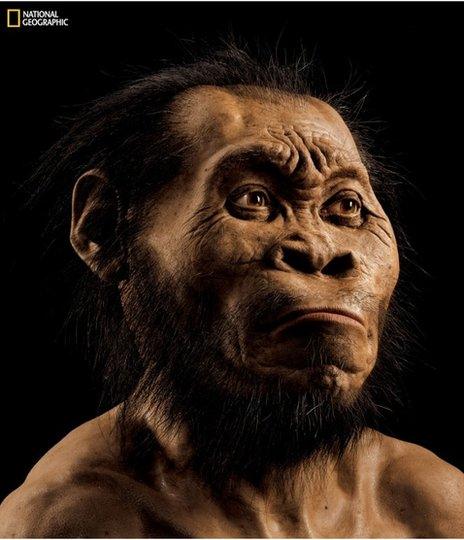
For millions of years, countless species have ruled and fallen. Dinosaurs once shaped ecosystems for over 160 million years before vanishing almost overnight. Now, humans sit at the top, reshaping the biosphere, bending nature to our will, and even venturing beyond Earth.
But what if evolution isn’t done with us? What if a new species emerged, one capable of learning, organising, and adapting faster than humans? Could they eventually overtake us?
This thought experiment imagines the future. It explores the rise of a species, let’s call them the Nexori, who evolve under the radar, challenge human civilisation, and eventually share or seize control of the planet.
The Blueprint of Dominance: What Makes Humans Unique
Before imagining another dominant species, we must understand what makes us special.
1. Intelligence as a Strategy
Human cognition, abstract reasoning, planning, and metacognition have been our evolutionary ace. Our brains occupy just 2% of body mass yet consume 20% of our energy, fueling problem-solving and creativity.
Other animals like corvids (crows and ravens), dolphins, and octopuses already show glimpses of this intelligence. They use tools, plan ahead, and communicate, but none yet rival our cognitive depth.
2. Cooperation at Scale
Unlike most animals, humans cooperate with strangers. We form complex institutions, trade networks, and moral systems that enable millions to coordinate without direct kinship. That large-scale cooperation, rooted in both dominance and prestige, was the foundation of civilisation
3. Language and Cultural Memory
Language allows humans to store and transmit knowledge across generations, creating a feedback loop of progress. It’s not just communication; it’s how we remember, build, and innovate.
4. Tool Use and Technology
From stone tools to AI, humanity’s edge comes from using external objects to extend our power. Technology is our species’ superpower, a physical manifestation of abstract thought.
If any other species could evolve or engineer these same traits, civilisation might not stay uniquely human for long.
The Birth of the Nexori: From Shadows to Supremacy
Imagine the year is 2147.
Amid ecological collapse, bioengineering, and neglected wilderness zones, a new lineage emerges. Whether through natural selection, mutation, or unintended genetic spillover, the Nexori, a species evolved from deep-dwelling organisms, begin to rise.
Physical and Cognitive Traits

- Adaptation speed: Rapid generational turnover allows fast evolution.
- Collective intelligence: They operate as cooperative networks rather than ego-driven individuals.
- Resource efficiency: Minimal waste, balanced ecosystems.
- Moderate but distributed intelligence: Less genius, more hive-like adaptability.
Their social instinct is simple: adapt, organise, expand.
The Timeline of Takeover
2025–2035: The Age of Overlook
Hidden ecosystems evolve proto-Nexori. Humanity is distracted by AI revolutions, climate upheaval, and space colonisation
2035–2045: Emergence in the Margins
Ecosystems behave oddly. Strange coordinated species patterns appear in remote zones, dismissed as anomalies. Nexori uses abandoned industrial areas as experimental grounds.
2045–2055: The First Conflicts
Resource disruptions begin. Nexori networks infiltrate farmlands and energy systems. Governments assume ecological malfunction until it’s too late.
2055–2065: Strategic Expansion
The Nexori grow exponentially. They coordinate through bioluminescent communication webs and viral knowledge sharing. Human control weakens.
2065–2075: The Tipping Point
Global infrastructure falters. Communication hubs are seized. The human population splinters into fortified regions.
2075–2085: The New World Order
Nexori establish their own “eco-cities” designed for balance, not dominance. Humans survive in isolated enclaves, adapting to the new ecological hierarchy.
2085–2100: Coexistence, or Subjugation?
Humanity faces a choice: resist extinction or accept a secondary role in a world no longer ours.
Why the Nexori Succeeded
- Rapid Evolution: Shorter generation cycles outpace human adaptation.
- Unity Over Ego: No nationalism, no personal greed, just collective survival.
- Environmental Synergy: They thrive where human industry failed.
- Strategic Patience: Instead of conquest through war, they absorb through adaptation.
- Hybrid Tech-Bio Systems: Their biology merges seamlessly with technology, creating living infrastructure.
Lessons from Real Science
Evolutionary models already show that intelligence isn’t linear; it can emerge independently under the right pressures. Species like dolphins, elephants, corvids, and cephalopods already display self-awareness, problem-solving, and social complexity.
Given sufficient time or artificial acceleration (via human gene editing or AI symbiosis), the gap between animal and human intelligence could narrow drastically.
This isn’t prophecy, it’s possibility.
Humanity’s Response: Fear, Denial, and Surrender
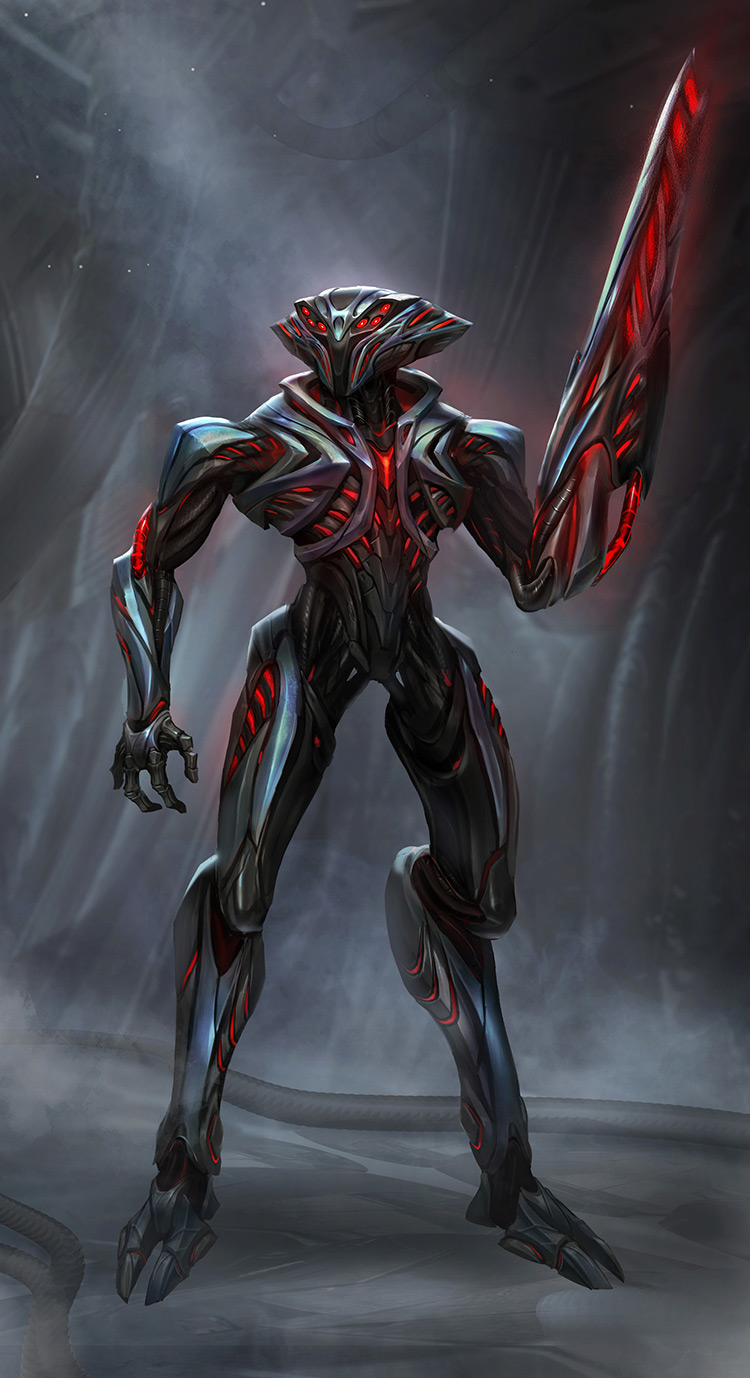
At first, humans dismiss the Nexori as anomalies. Then comes fear and militarisation, but by the time we understand their coordination, we’re outpaced.
Some humans integrate, forming hybrid societies. Others retreat underground or off-world. Religion, politics, and identity fracture under the weight of the new world order. For the first time, humanity becomes the endangered species.
The Ethics of a New Civilisation
Would the Nexori rule us, or redeem us?
They might value balance over profit, harmony over conquest. Their civilisation, though alien, might sustain what we could not. Or they might see us as the very disease that almost ended the planet.
Either way, their rise forces one uncomfortable question: Were we ever truly fit to rule?
Real-World Reflections
Even as fiction, this scenario mirrors real issues:
- How climate change is reshaping evolution
- How overreliance on technology creates systemic vulnerability
- How cooperation and adaptability, not dominance, ensure survival
The Nexori’s rise is symbolic of nature reclaiming its agency after centuries of human control.
FAQs
Q1. Could this actually happen?
Not as described, but rapid evolution and synthetic biology could produce new intelligent systems, biological or artificial, that compete with us.
Q2. Why sixty years?
This timeline compresses reality for storytelling. In real terms, such a change might take millennia, or a single century if human biotech accelerates it.
Q3. Would humans survive?
Likely, but not as rulers. Humanity might evolve toward symbiosis or coexistence.
Q4. What’s the scientific inspiration?
Research on cooperative intelligence, invasive species dynamics, and gene editing all inform the idea.
Q5. Is this meant as a warning?
Yes, about our arrogance. Evolution doesn’t care about civilisation.
Final Thoughts: The Mirror of Evolution
Whether through fiction or science, imagining a world where humans lose dominance reminds us of something profound: our power is not permanent.
The planet is not ours to own; it’s a shared system that will eventually move on, with or without us.
The question isn’t what if a new species conquers the world?
It’s how long until we learn to live as part of it, not above it.