
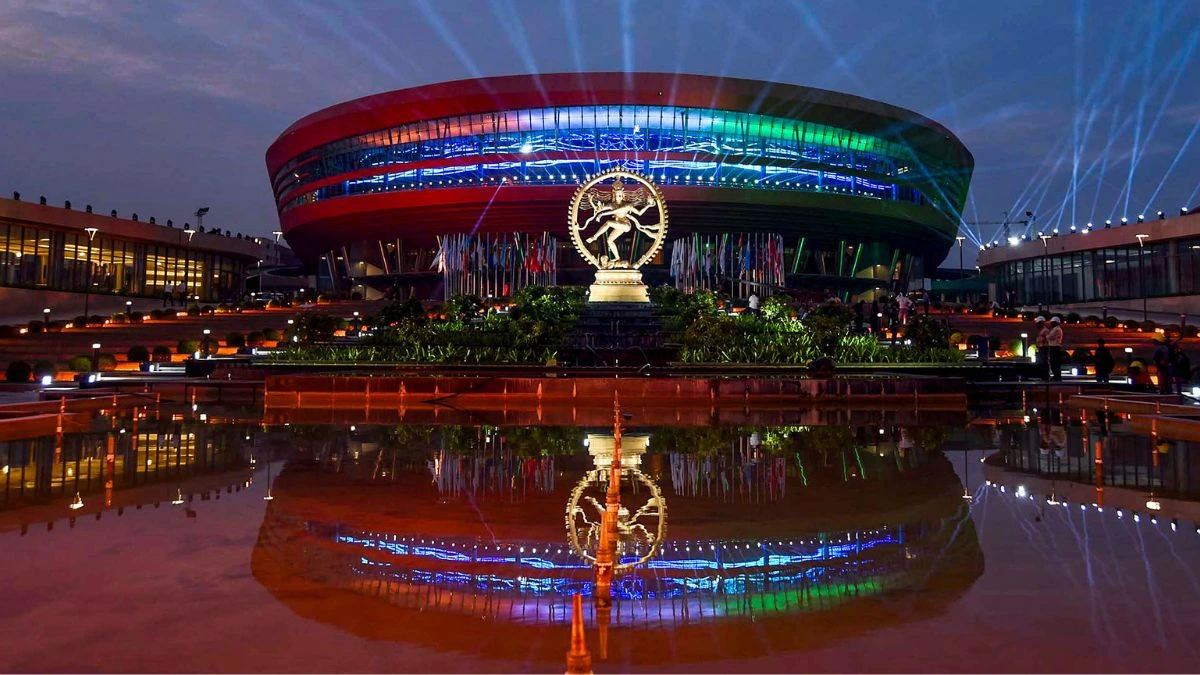
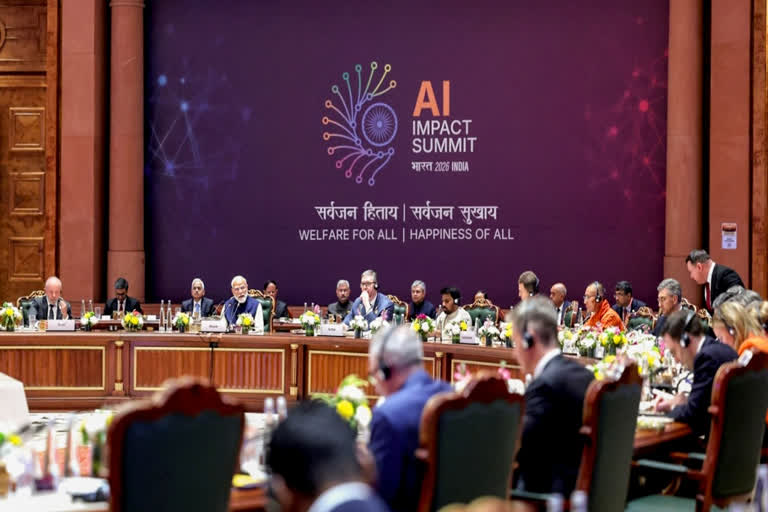
The world’s eyes were fixed on New Delhi this week as India hosted the monumental India AI Impact Summit 2026. From February 16th to 20th, the iconic Bharat Mandapam was transformed into a global nerve centre for artificial intelligence, bringing together world leaders, tech titans, and over 250,000 visitors. Under the profound theme of "Sarvajana Hitaya, Sarvajana Sukhaya" (Welfare for All, Happiness for All), the summit didn't just showcase technology; it charted a new moral and economic compass for the AI era.
| Event Detail | Information |
|---|---|
| Dates | February 16 – 20, 2026 |
| Main Venue | Bharat Mandapam, New Delhi |
| Key Theme | Sarvajana Hitaya, Sarvajana Sukhaya |
| Endorsed By | 88 Nations (New Delhi Declaration) |
| Total Visitors | ~250,000 |
| Total Exhibitors | 300+ from 30+ countries |
| Key Framework | MANAV (Multilateral AI Network for Advanced Value) |
A Human-First Vision: PM Modi’s MANAV
In his inaugural address, Prime Minister Narendra Modi unveiled a transformative vision for the future: MANAV (Multilateral AI Network for Advanced Value). Emphasising a "human-first" approach, the Prime Minister argued that the true success of AI lies not in its computational power, but in its ability to empower the common citizen.
"We are entering an era where humans and intelligent systems co-create, co-work, and co-evolve. Our vision is 'MANAV over machine', ensuring that technology serves humanity's progress, not the other way around."
— PM Narendra Modi [1]
The MANAV framework focuses on three foundational pillars, or Sutras:
- People: AI as a force for human dignity and inclusion. This pillar emphasises that AI should not replace human intuition but augment it, particularly in sectors like education and healthcare, where empathy is irreplaceable.
- Planet: Responsible innovation that protects our environment. With the growing energy demands of AI data centres, India called for "Green AI" initiatives that prioritise energy efficiency and sustainable infrastructure.
- Progress: Democratizing resources to ensure equitable global growth. This involves sharing the benefits of AI with the Global South, ensuring that the technological divide does not widen.

The New Delhi Declaration: A Global Consensus
The summit’s crowning achievement was the adoption of the New Delhi Declaration on AI Impact, endorsed by 88 nations, including the United States, the United Kingdom, and China. This historic document marks a shift from theoretical ethics to concrete action.
Key highlights of the Declaration include:
- Democratizing AI: A commitment to making high-performance computing and datasets accessible to the Global South. This includes the creation of a "Global AI Compute Bank" where developed nations contribute processing power for research in developing countries.
- Open-Source Ecosystems: Promoting transparent and collaborative AI development to prevent monopolies. The declaration encourages the use of open-source models for public service delivery.
- Sovereign AI: Encouraging nations to develop their own AI capabilities tailored to their unique linguistic and cultural needs. India’s "Bhashini" project was cited as a prime example of using AI to break language barriers across 22 official languages.
Tech Titans and Billion-Dollar Pledges
The summit was a magnet for global tech leadership. Sundar Pichai (Google), Sam Altman (OpenAI), and Dario Amodei (Anthropic) shared the stage with Indian industrialist Mukesh Ambani.
- Google announced a massive expansion of its AI research centres in India, focusing on agriculture and healthcare. Pichai highlighted a new "AI for Small Farmers" initiative that uses satellite imagery and LLMs to provide real-time crop advice in local dialects.
- OpenAI's Sam Altman noted that India is poised to become one of the world’s largest and most sophisticated AI markets. He announced a partnership with the Indian government to train 1 million developers in "Safety-First AI" development [2].
- Reliance Industries committed billions to "Jio Brain," a suite of AI tools designed to bring intelligent services to every Indian household at affordable rates. Mukesh Ambani stated, "AI should not be a luxury for the few, but a utility for the many."

The Seven Chakras of Action
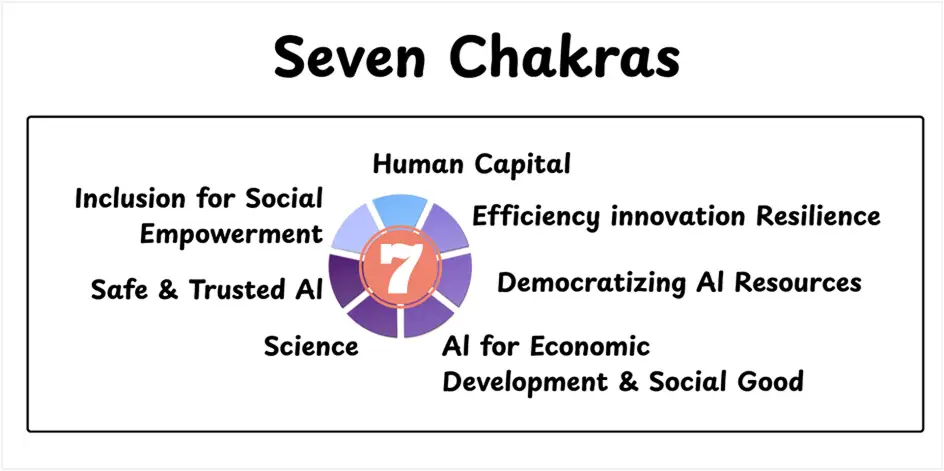
The summit organised its deliberations into seven "Chakras" or action areas, ensuring that every facet of society was addressed:
- Human Capital: Skilling the workforce for an AI-driven economy. A new "National AI Skilling Framework" was launched to retrain 10 million workers over the next three years.
- Inclusion: Using AI to bridge the digital divide. Sessions focused on AI-powered assistive technologies for the differently-abled and rural populations.
- Safe and Trusted AI: Building robust guardrails. India proposed a "Global AI Safety Registry" to track and mitigate risks from advanced AI models.
- Resilience & Efficiency: Applying AI to strengthen supply chains. AI-driven logistics were showcased as a way to reduce waste in India's food supply chain by 30%.
- Science: Accelerating breakthroughs. A joint Indo-US AI lab was announced to focus on climate modelling and renewable energy storage.
- Democratizing Resources: Creating shared AI "commons." This includes the "IndiaAI Datasets Platform," providing high-quality, non-personal data for startups.
- Economic Growth: Leveraging AI to add trillions to the global GDP. Experts predicted that AI could contribute $500 billion to India’s economy alone by 2030.
Spotlight on Innovation: The Startup Pavilion
Beyond the high-level plenaries, the Startup Pavilion was a hive of activity. Over 500 AI startups from across India and the world showcased solutions ranging from AI-powered diagnostic tools for rural clinics to autonomous drones for precision farming. One standout was an AI system that translates sign language into spoken text in real-time, facilitating seamless communication for the hearing impaired.
Conclusion: India as the AI Lighthouse
As the curtains fall on the AI Impact Summit 2026, the message is clear: India is no longer just a consumer of technology; it is the "AI Lighthouse" for the Global South. By championing a model that balances innovation with equity, the New Delhi summit has ensured that the AI revolution will be one that leaves no one behind. The "Delhi Spirit" of collaboration and human-centricity is now the global benchmark for the intelligent age.
Sources & References
- Prime Minister's Office - Inaugural Address at AI Impact Summit 2026
- Reuters: Tech Majors Commit Billions at India AI Summit
- The Hindu: 88 Countries Endorse New Delhi Declaration on AI
- Official Portal: India AI Impact Summit 2026
- Bloomberg: Modi, Pichai, and Altman Speak at Delhi Summit
- PIB: India AI Impact Summit 2026 Concludes with Adoption of New Delhi Declaration
- TechCrunch: Global Leaders and Tech Giants Converge in New Delhi for AI Summit