
The artificial intelligence landscape is shifting at an unprecedented pace, and the last 24 hours have delivered some of the most consequential developments we have seen this year. From high-stakes political maneuvering to massive enterprise investments and the escalating race for custom silicon, the major players are making bold moves to secure their dominance in the AI era.
Today, we are diving deep into three massive stories that are reshaping the future of technology. OpenAI is reportedly offering the US government a significant ownership stake to navigate political headwinds. Meanwhile, Microsoft is doubling down on enterprise AI adoption with a staggering $2.5 billion investment in a new "Frontier Company." Finally, Anthropic is taking a page out of the custom hardware playbook, entering talks with Samsung to manufacture its own AI chips. These developments highlight a critical transition: AI is moving from experimental research labs into the core of global infrastructure, enterprise operations, and national security.
OpenAI Proposes 5% Stake to the US Government
In a move that underscores the growing intersection of artificial intelligence and national interests, OpenAI has reportedly floated the idea of giving the United States government a 5% ownership stake in the company. This proposal, first reported by the Financial Times, is seen as a strategic effort by CEO Sam Altman to ease tensions with the incoming Trump administration and address mounting public and political scrutiny over the rapid advancement of AI technologies.
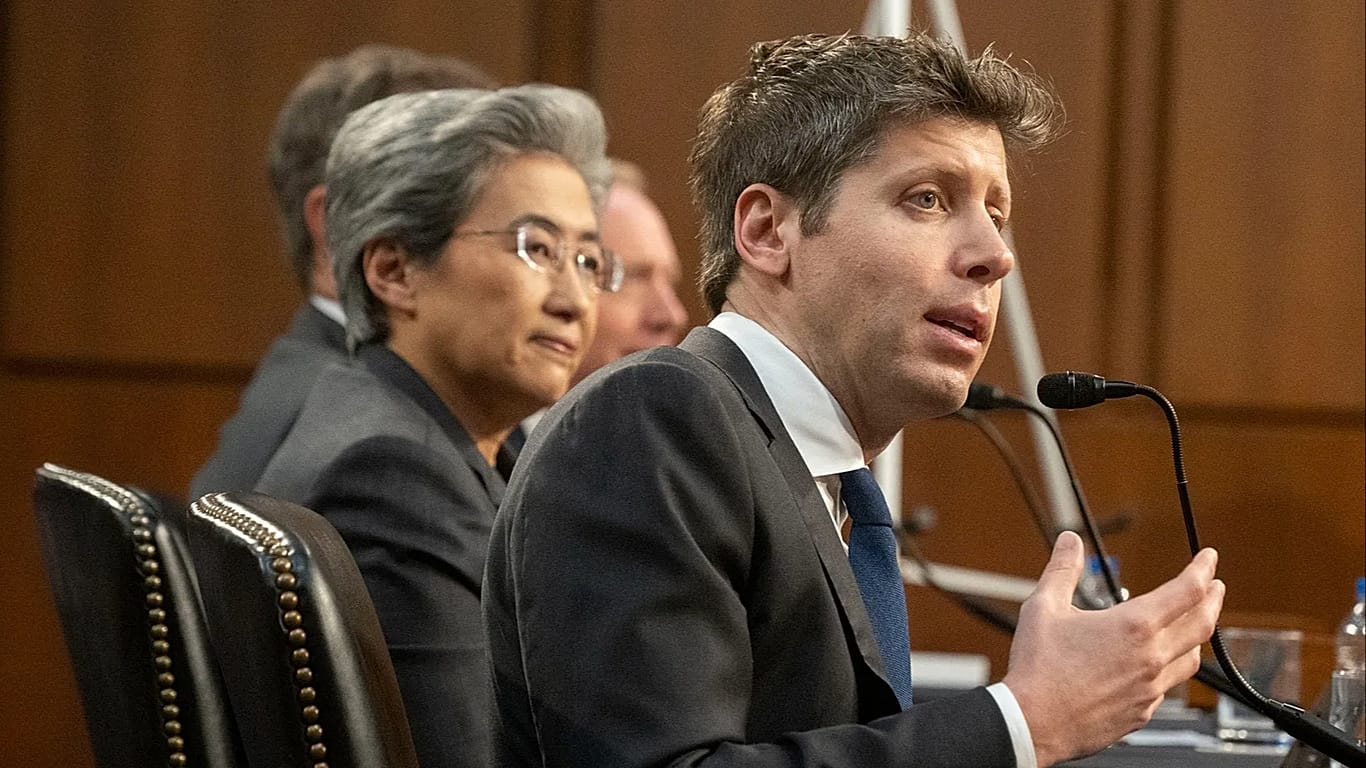
The implications of this proposal are massive. Based on OpenAI's recent funding round, which valued the company at an astonishing $852 billion, a 5% stake would be worth approximately $42.6 billion. Altman has reportedly argued that giving the public a direct financial interest in the company is the most effective way to ensure that the economic upside of the AI boom is shared broadly with American citizens.
This unprecedented offer comes at a time when AI companies are facing intense pressure from lawmakers regarding safety, regulation, and the potential societal impacts of artificial general intelligence (AGI). By aligning its financial success with the US government, OpenAI may be seeking to secure a more favorable regulatory environment and solidify its position as a national champion in the global AI race.
"Democratic institutions must not cede their responsibilities to AI labs. The labs develop the technology, but citizens and their elected representatives must make the decisions about how it is deployed." — Sam Altman, OpenAI CEO
While the discussions are reportedly still in their early stages, the proposal also suggests that other leading US AI companies could contribute similar equity stakes to a public investment vehicle. However, it remains highly uncertain whether competitors like Anthropic, Google, or Meta would agree to such an arrangement. If realized, this deal would represent a historic blurring of the lines between private tech innovation and state ownership.
Microsoft Launches $2.5 Billion "Frontier Company"
While OpenAI navigates the political sphere, its primary partner, Microsoft, is aggressively pushing AI into the corporate world. Microsoft has announced the launch of a new business unit dubbed the "Frontier Company," backed by a massive $2.5 billion budget. The goal? To embed 6,000 AI engineers and industry experts directly inside enterprise clients to accelerate the adoption and deployment of AI systems.
This initiative addresses a growing challenge in the AI industry: while the underlying models are incredibly powerful, many enterprises struggle to integrate them into their core operations in a way that delivers measurable return on investment (ROI). AI budgets are under mounting scrutiny, and productivity gains have sometimes been hard to pin down. Microsoft's Frontier Company aims to bridge this gap by providing hands-on, co-innovation support.

According to Judson Althoff, CEO of Microsoft Commercial Business, these 6,000 experts will work alongside customers to "co-design, co-innovate, deploy and continuously improve AI systems at scale based on measurable business outcomes." This represents a significant shift from merely selling access to AI APIs to actively building custom solutions on the ground.
The creation of the Frontier Company also highlights a subtle but important dynamic in the AI ecosystem. Microsoft is positioning itself as a platform-neutral alternative to companies like OpenAI and Anthropic, which are increasingly pushing their own models through their own deployment arms. By offering a dedicated engineering force, Microsoft aims to ensure that its Azure cloud platform remains the indispensable foundation for enterprise AI, regardless of which specific foundation model a customer chooses to use.
Key Aspects of Microsoft's Frontier Company
| Feature | Details |
|---|---|
| Investment | $2.5 Billion budget allocation |
| Workforce | 6,000 forward-deployed AI engineers and industry experts |
| Objective | Embed experts within enterprise clients to co-design and deploy AI systems |
| Focus | Delivering measurable business outcomes and ROI from AI investments |
Anthropic in Talks with Samsung for Custom AI Chips
The race for AI supremacy is not just about software; it is fundamentally constrained by hardware. Recognizing this, Anthropic, the creator of the Claude family of models, has reportedly initiated early-stage development of a custom AI server chip. According to The Information, Anthropic has held preliminary discussions with Samsung Electronics to serve as the manufacturing partner for this new silicon.
This move signals Anthropic's intent to reduce its reliance on third-party hardware providers, particularly Nvidia, whose GPUs currently dominate the AI training and inference markets. By designing its own chips, Anthropic aims to optimize performance specifically for its Claude models and, crucially, lower the exorbitant costs associated with running massive AI infrastructure.

While the project is still in its infancy—with no detailed design finalized and the company still determining the exact specifications and power requirements—the strategic direction is clear. Anthropic has been actively recruiting chip engineers, including Clive Chan, a veteran of both Tesla's and OpenAI's custom chip teams, to build out a dedicated hardware group.
Anthropic is following a well-established playbook. The tech giants that can build and operate AI infrastructure most efficiently will ultimately capture the lion's share of the value. Google has its TPUs, AWS has Trainium and Inferentia, and OpenAI recently unveiled "Jalapeño," its first in-house inference chip built in partnership with Broadcom. By partnering with Samsung, a global leader in semiconductor manufacturing, Anthropic is positioning itself to compete at the foundational hardware level.
Despite these efforts, Anthropic has publicly downplayed the immediate impact, stating that chips from AWS, Google, and Nvidia will remain central to its strategy for the foreseeable future. Developing custom silicon is a multi-year, multi-billion-dollar endeavor, but it is a necessary step for any company aiming to control its own destiny in the AI era.
The Big Picture: Consolidation and Integration
When viewed together, these three stories paint a clear picture of the current state of the AI industry. We are moving past the initial hype cycle of generative AI and entering a phase of deep integration and strategic consolidation.
- Political Integration: OpenAI's proposal to the US government shows that AI is now viewed as critical national infrastructure, requiring unprecedented public-private partnerships.
- Enterprise Integration: Microsoft's Frontier Company demonstrates that the real value of AI will be unlocked not just by better models, but by armies of engineers doing the hard work of integrating those models into legacy corporate systems.
- Hardware Integration: Anthropic's move toward custom silicon highlights that software innovation is inextricably linked to hardware efficiency, and the biggest players must control the entire stack to remain competitive.
As these initiatives unfold over the coming months and years, they will fundamentally reshape how AI is developed, deployed, and governed on a global scale.
Why is OpenAI offering a 5% stake to the US government?
OpenAI CEO Sam Altman reportedly proposed the 5% stake to ease political tensions, navigate potential regulatory hurdles with the incoming Trump administration, and ensure that the American public shares in the financial upside of the AI boom. Based on recent valuations, this stake could be worth over $42 billion.
What is the purpose of Microsoft's Frontier Company?
Microsoft's Frontier Company is a new $2.5 billion business unit that will embed 6,000 AI engineers and industry experts directly inside enterprise clients. The goal is to help these companies co-design, deploy, and scale AI systems to achieve measurable business outcomes and ROI, moving beyond just selling access to AI models.
Why is Anthropic developing its own AI chips?
Anthropic is reportedly developing custom AI chips in partnership with Samsung to reduce its reliance on expensive third-party hardware, primarily from Nvidia. By designing chips optimized specifically for its Claude models, Anthropic aims to lower the massive costs associated with AI inference and training, following similar moves by Google, AWS, and OpenAI.
Will Anthropic stop using Nvidia chips?
No. Anthropic has stated that chips from AWS, Google, and Nvidia remain central to its current strategy. Developing custom silicon takes years, so while they are planning for the future, they will continue to rely heavily on existing hardware providers in the near term.
References
- Financial Times: OpenAI proposes handing Trump administration 5% stake
- The Verge: OpenAI floats giving Trump administration 5 percent cut of AI boom
- The Decoder: Microsoft launches $2.5 billion "Frontier Company" to embed 6,000 AI engineers inside enterprise clients
- The Decoder: Anthropic reportedly explores custom chip manufacturing with Samsung
- Bloomberg: Anthropic in Talks With Samsung for Custom AI Chip